
The VaLoo Impact projects address regulatory challenges related to closing water and nutrient cycles using innovative practical examples. Favorable framework conditions are developed in collaboration with practitioners, academia, and authorities.
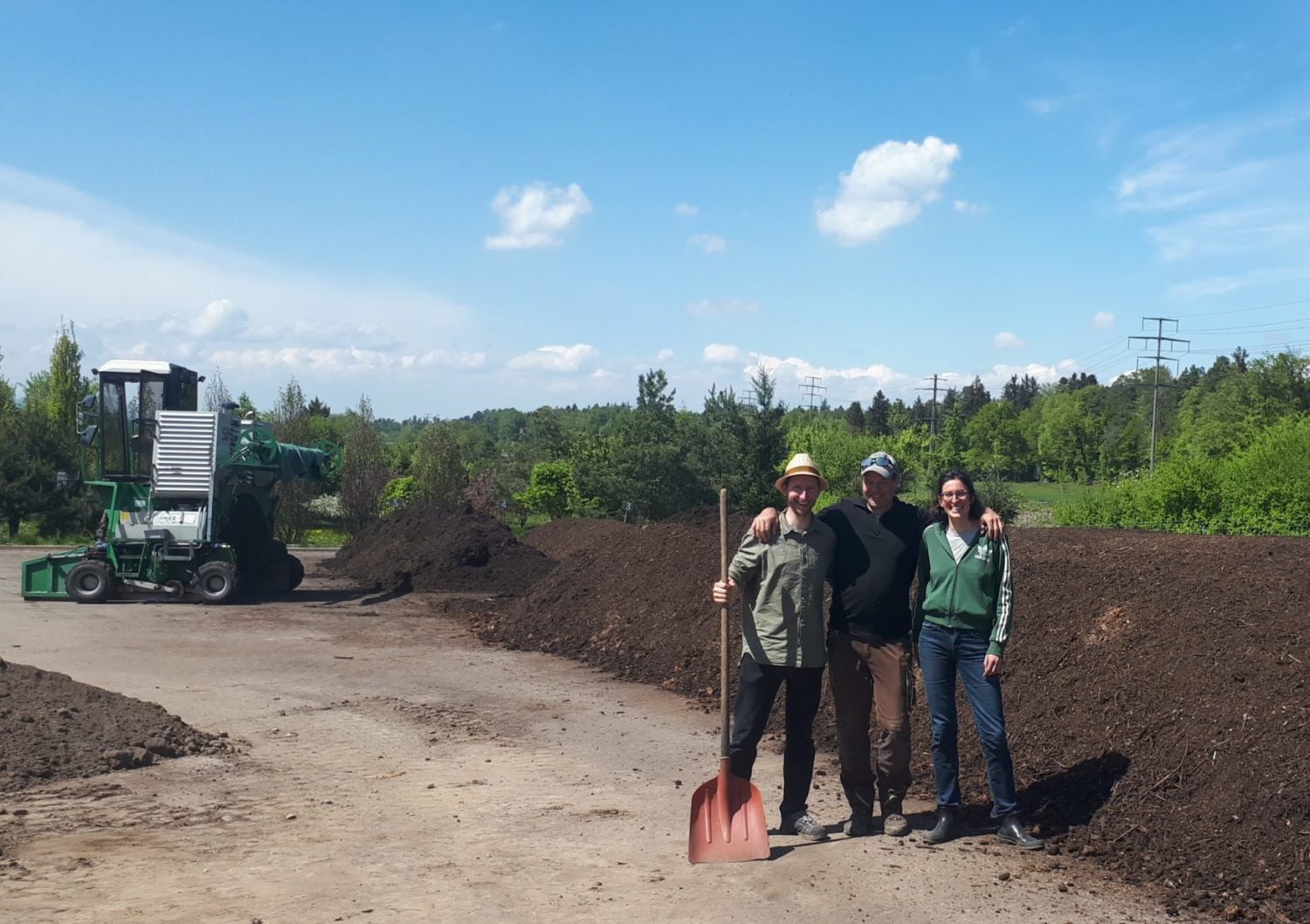
The Composting Impact Project (Uster, 2022–2025), in collaboration with Kompotoi AG, aimed to advance the recognition of recycled fertilizer derived from dry toilet contents. In a scientifically monitored pilot trial, the contents of dry toilets were composted and the quality of the resulting compost was tested. In excange with cantonal and federal authorities, we worked towards establishing a regulatory framework for the treatment of these resources. The project was completed in April 2025.
Click here for videos from the closing event:
• Tour of the composting facility
• Expert presentations & results
Background:
Separately collected human excreta—such as those from dry toilets—are not legally defined. At the start of the project, they were classified neither as waste nor as biogenic waste, which makes their use in the recycled fertilizer cycle impossible. Consequently, these raw materials are also not included on the positive list of waste suitable for composting or anaerobic digestion (ADWO (VVEA), Enforcement of Biogenic Waste Regulations, 2018). Positivliste zur Kompostierung oder Vergärung geeigneten Abfälle aufgenommen (VVEA, Vollzug Biogene Abfälle, 2018).
Objectives:
1. Clarification of the legal status of separately collected human excreta intended for composting
2. Optimization of the composting process and establishment of indicators for quality assurance
3. Identification of realistic approval pathways for the use or sale the compost produced, and drafting of a corresponding application
Activities:
• Analysis of the regulatory framework and development of a case for action in the form of a discussion paper
• Development of an analysis plan based on binding guidelines and quality standards, supplemented by indicators for pathogens and drug residues
• Examination of two compost batches
• Technical exchange with authorities and experts
Results:
• The final report of the pilot project summarizes two successfully conducted trials and serves as a basis for dialogue with the authorities
• In 2024, concrete proposals were developed for regulating the treatment of dry toilet contents into compost. These are now to be further elaborated
• As a result of the project, dry toilet contents may be composted on the grounds of the Uster Tree Nursery and utilized on its own land with cantonal approval. Additional approvals may be granted upon request. The sale of the compost is still not permitted
Outlook:
The continuation of the Impact Composting Project, with a focus on utilization, is currently being developed. An application project will supplement the data set and continue the dialogue with authorities and composting experts.
Project participants:
1. Practice partner
Kompotoi AG, project owner and supplier of dry toilet contents
Kunz Baumschule, responsible for composting
Stutz Environmental Law, involved for legal support
VaLoo, responsible for supervision and monitoring
The project was made possible by the Migros Pioneer Fund
2. Scientific support
Researchers from Eawag assisted in evaluating the project results. The first compost sample from Uster was analyzed for several dozen pharmaceuticals as part of a postdoctoral project at ETH Zürich in collaboration with Agroscope and compared with earlier results (see publication Schinkel et al., 2025).
3. Regulatory cooperation
The pilot permit for the trial was issued by the Zurich Office for Waste, Water, Energy, and Air (AWEL). Additionally, there was an exchange with the Federal Office for the Environment (BAFU, Raw Materials Cycles Division) and the Federal Office for Agriculture (BLW, Agri-Environmental Systems and Nutrients Division). The cantonal offices responsible for green waste were informed of the project results.
Project documentation and literature:
2025, Final Report on the Uster Pilot Trial
2025, Slides from the closing event
Huch & Carpentier, 1/2024, 1x brünzle = 3 Rüebli, compostmagazin
22.4.2025, Start-up lässt Bäume auf Kot und Urin wachsen, Tagesanzeiger