
Ressource-oriented Sanitation Systems
In resource-oriented sanitation systems, human waste and wastewater are considered valuable raw materials, not waste. These systems aim to recover water, energy, and nutrients while protecting the environment and public health.
These systems connect housing, food production, and consumption in a closed cycle.
Through separate collection, innovative treatment, and targeted recycling, nutrients, organic substances, and water can be reused. This reduces the use of drinking water, lowers energy consumption, and establishes the foundation for circular and resilient sanitation systems.
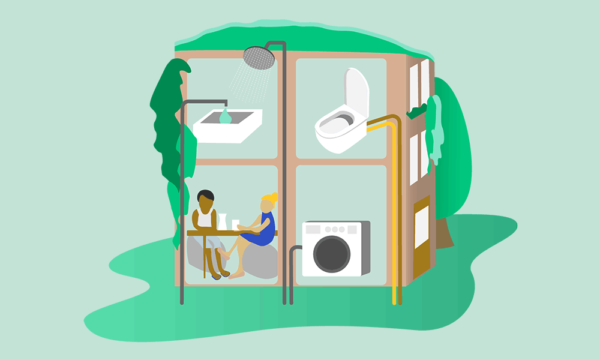
Housing & Living
Only just under a third of the 142 liters of drinking water or fresh water consumed by a Swiss household comes from the taps used to fill glasses, wash plates and wash hands. The rest of the water is used for applications that do not necessarily require drinking water quality.
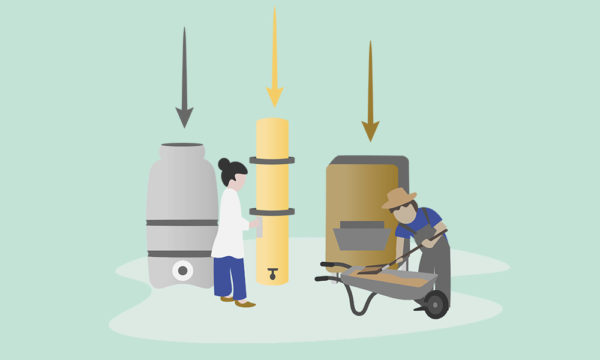
Collection & Treatment
For many people, dealing with wastewater ends when they flush the toilet or remove hair from the drain. This attitude is referred to as “flush and forget.” An achievement of matured industrialized nations?

Reuse & Production
Circular sanitation systems allow the use of resources from wastewater. Wastewater contains nutrients, organic materials, energy and, of course, water – unless it is a dry toilet.