
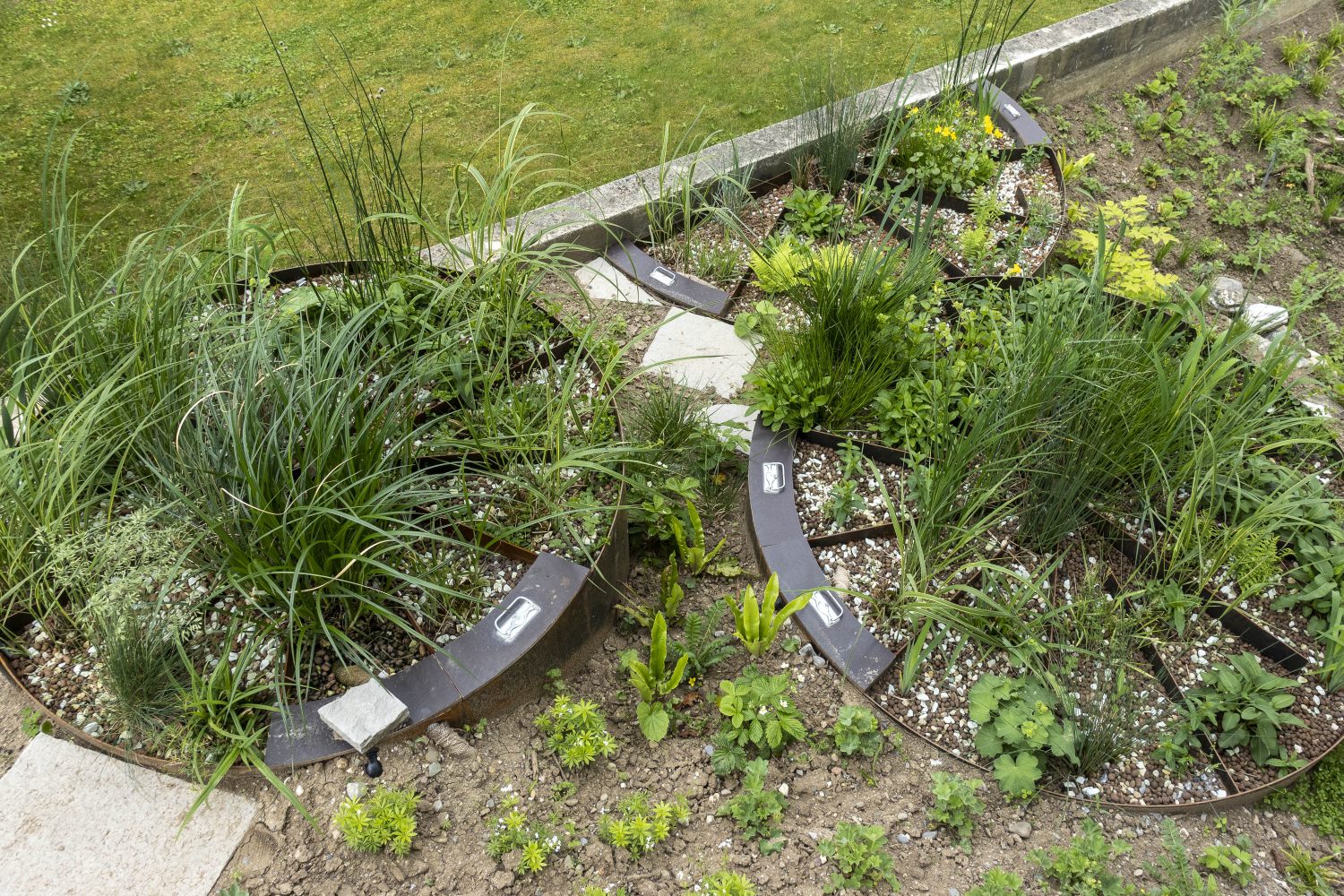
The ValueNext project (2023–2026) examined the legal, organizational, and technical framework conditions for the use of treated gray water in Switzerland. The study combined an analysis of the legal framework with an evaluation of pilot projects, a survey of operators, a survey of potential users, and interviews with representatives of cantonal and national authorities. This resulted in recommendations for practice and policy to promote the safe and practical use of gray water. The results are summarized in a comprehensive final report.
Initial situation
The local treatment and reuse of gray water, which comprises domestic wastewater without toilet waste, is seen as a way of increasing the resilience of the water infrastructure and reducing water consumption. The treated gray water can be used for applications such as toilet flushing or laundry. However, there is currently no sufficient basis for the safe and practical implementation of graywater systems due to an unclear legal framework, a lack of standards, unclear responsibilities, and differing cantonal enforcement practices.
Aim of the project
The aim of the study was to analyze the legal, organizational, and technical framework conditions for gray water use in Switzerland and to derive recommendations for creating a basis for the practical implementation of gray water systems.
Activities and implementation
- Analysis of international and national legal frameworks for gray water utilization
- Evaluation of existing pilot projects and operational experience
- Conducting an operator survey on operating experience and approval procedures
- Evaluation of a user survey on the acceptance of alternative water systems
- Interviews with representatives of cantonal and national authorities
- Synthesis of results and formulation of recommendations for practice and policy
Findings
- Greywater reuse is only indirectly regulated in Switzerland. While its use in buildings is possible in principle, a lack of standards and differing cantonal enforcement practices lead to a regulatory gray area.
- The technical functionality of graywater systems is fundamentally sound, but requires context-specific planning and suitable monitoring and operating concepts.
- Approval procedures vary between cantons and are often complex and associated with unclear or differing requirements. Financial incentives are largely lacking.
- Potential users are generally positive about the use of treated water, provided that the systems are safe and easy to operate.
- Government officials assess gray water use differently depending on the institutional context. Non-potable applications inside buildings do not currently fall under any clearly defined area of responsibility.
Recommendations
The study recommends the following measures to promote safe and practical gray water use:
- Clarification of the legal framework through clear definitions, coordinated approval procedures, regulation of gray areas, and revision of existing regulations.
- Development of technical standards and guidelines
- Ensuring operation and monitoring through clear operator obligations and training
- Creation of financial incentives, for example through fee structures or funding instruments
- Strengthening cooperation between authorities, practitioners, and researchers to further develop standards and enforcement aids
Outlook
The recommendations for further steps are as follows:
- In the short to medium term, measures can be implemented within the existing legal framework, in particular through adjustments in enforcement and the development of technical guidelines
- Experience gained from existing pilot plants should be systematically evaluated and transferred to practice and training
- As part of ongoing revisions, adjustments can be made to legal bases and enforcement practices as the situation requires
- In the long term, the knowledge gained should be incorporated into a coherent national regulatory framework.
- Interdisciplinary working groups and permanent exchange platforms should strengthen cooperation between the federal government, cantons, municipalities, research, and practice.
Project participants
- Zurich University of Applied Sciences (ZHAW), Ecotechnology Research Group, project management and content implementation
- Technical advisory group with representatives from VaLoo, Eawag, and AWEL
- Representatives of cantonal and national authorities were involved in interviews and exchange formats.
Project documentation
Final report: Graywater use in Switzerland – Synthesis and recommendations, ZHAW, 2026
Funding
This study was supported by VaLoo. Made possible by the Migros Pioneer Fund, VaLoo is advancing resource-oriented sanitation in Switzerland.
